A Jordanian price with three decimal places can be unfamiliar on your first day. Read the dinar amount and the smaller units before paying, and keep smaller notes for modest purchases. Compare the amount you actually receive when exchanging money, rather than judging only an advertised rate.
Use a separate allowance for immediate transport and food so that a small payment problem does not affect your accommodation funds. Students at German Jordanian University (GJU) can build a more useful weekly budget from their first receipts once the arrival expenses are out of the way.
Dinars, piasters and fils
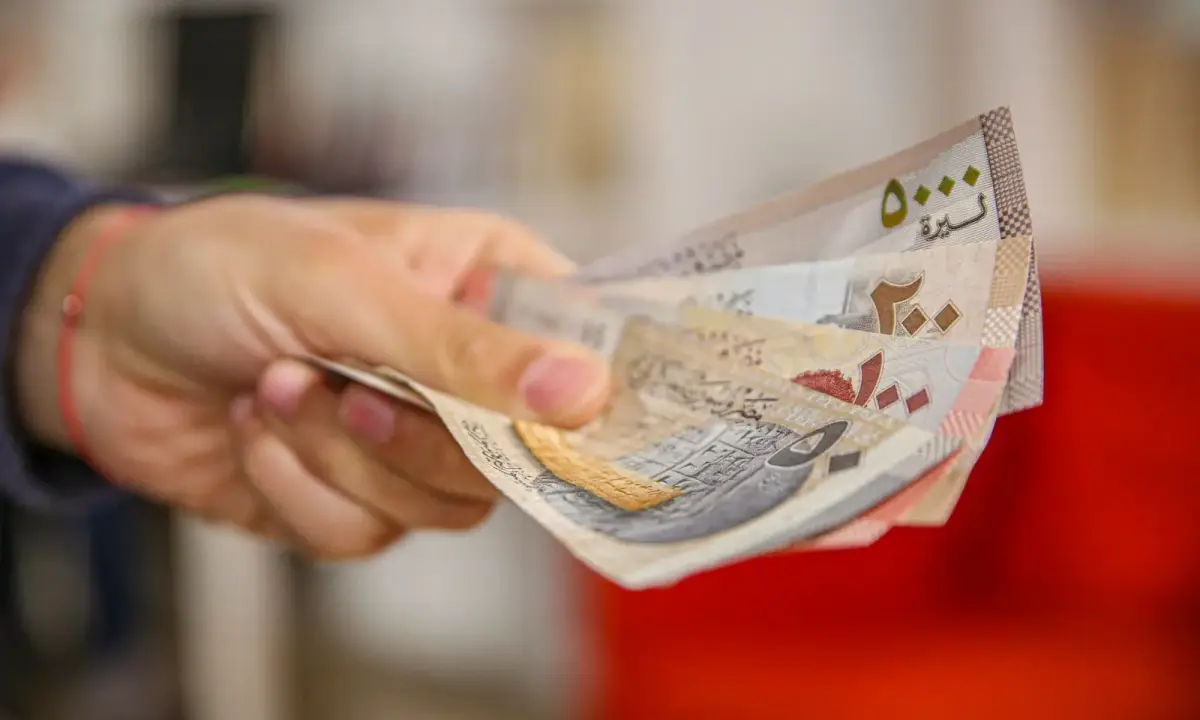
Jordan’s currency is the Jordanian dinar (JOD). One dinar equals 1,000 fils or 100 piasters. Jordan Customs lists banknotes of 1, 5, 10, 20 and 50 dinars. Recognise the value printed on a note and count the change rather than relying only on colour or size. Jordan Customs currency information.
| Price | In dinars and fils | A practical reading |
|---|---|---|
| 0.100 JOD | 100 fils | One tenth of a dinar. |
| 0.550 JOD | 550 fils | A little more than half a dinar. |
| 1.250 JOD | 1 dinar and 250 fils | One and a quarter dinars. |
| 10.000 JOD | 10 dinars | Ten dinars, with no additional fils. |
A sign may use JD, JOD or an Arabic dinar abbreviation. If the price or unit is unclear, ask before accepting the purchase. For produce, establish whether the number refers to a kilogram, a pack or one piece.
Check the transaction with a small calculation
For a JOD 1.250 purchase paid with JOD 5, the change is JOD 3.750. For two JOD 0.550 bus rides, the total is JOD 1.100. Write the calculation on your phone if that is easier than converting units while a queue is waiting.
If you pay for several people, distinguish the combined bill from the amount owed by one person. Keep the receipt until you have checked the items and change. For a shared grocery shop, agree the shared items before splitting the total.
Compare exchange offers by the final amount
Ask how many dinars you will receive for the exact amount you want to exchange, including any commission or fixed charge. Compare the same starting amount at each provider. A better advertised rate can be offset by a fee, especially on a small transaction.
Keep the exchange receipt and count the money before leaving the counter. Use an authorised financial provider and read the transaction record. Avoid making an informal exchange simply because someone offers to save you a walk.
Using a cash machine
Read the machine’s fee and currency-conversion screens before confirming a withdrawal. Your own card provider may add a separate fee or conversion cost; check those terms before travel. Keep the card provider’s help number available without needing the card itself.
Compare the final cost of a withdrawal rather than assuming every machine or card has the same terms. Protect your personal identification number, collect the card and cash before leaving, and keep any error receipt. If a machine retains your card, use the displayed bank contact and your card provider’s official channel.
Cards, cash and a payment backup
| Situation | Useful preparation |
|---|---|
| Small food purchase | A modest amount of cash and clarity about the price. |
| Restaurant or grocery delivery | The payment methods shown at checkout and a reachable phone. |
| A university or official fee | The payment channel and receipt required by that office. |
| Accommodation payment | The agreed recipient, amount, method and written record. |
| A card problem | Another available method and your provider’s contact details. |
Ask a shop about card acceptance before filling a large basket. Contactless availability at one business does not establish it at the next. If the payment appears to fail, check the confirmation and your transaction record before authorising a second attempt.
Make a small first-days cash plan
For an example allowance, JOD 10 for food and JOD 10 kept for transport make JOD 20 in immediate spending funds. Those are personal caps, not quoted taxi or meal prices. Add your actual transfer, entry and accommodation payments separately so that the same money is not counted twice.
Use the airport transport guide for arrival choices and the breakfast and lunch guide for menu examples. The produce and bread guide helps you compare food quantities without treating every pack as one kilogram.
Keep records for a longer stay
Record the amount, date and purpose of larger payments. For a non-governmental organisation (NGO) assignment, ask the employer what invoice or receipt is required for expenses; a personal banking screenshot may not be the document they need. Keep sensitive financial records out of shared chats.
Our Jabal Amman rooms and apartments for rent for international arrivals are available by room or as an entire apartment. Confirm the amount due, recipient, payment terms and bill arrangements in writing. Keep those records beside the agreement, and use the pre-travel checklist to prepare your payment backups before departure.